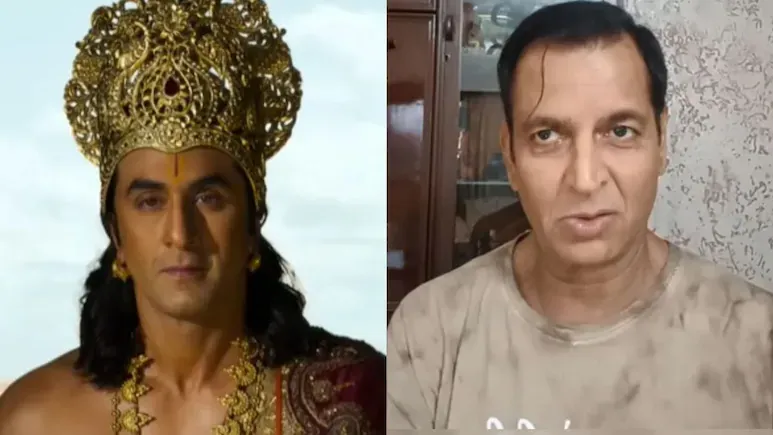
The teaser of Ramayana has triggered widespread discussion across the entertainment industry, particularly around visual effects quality and casting decisions. As one of the most ambitious mythological adaptations in Indian cinema, the project carries significant financial and cultural expectations. Early audience reactions have been mixed, with scrutiny focused on production values and character portrayal. The debate underscores the high commercial stakes tied to large-scale productions, where audience perception can directly influence box office performance, brand partnerships, and long-term franchise potential in an increasingly competitive cinematic landscape.
A High-Stakes Teaser Under Scrutiny
The release of the Ramayana teaser has placed the film at the center of public discourse. As a project rooted in one of India’s most revered epics, expectations surrounding authenticity, visual grandeur, and narrative fidelity are exceptionally high.
Initial reactions suggest a divided audience response. While some viewers have praised the ambition and scale, others have raised concerns regarding the quality of visual effects and the suitability of casting choices. This divergence reflects the challenges inherent in adapting culturally significant material for modern audiences.
Visual Effects: A Benchmark for Big-Budget Cinema
In contemporary filmmaking, particularly within the mythological and fantasy genres, visual effects (VFX) serve as a critical determinant of audience immersion. High-budget productions are expected to deliver world-class visual standards comparable to global benchmarks.
The scrutiny surrounding Ramayana’s VFX highlights the increasing expectations of Indian audiences, who are now accustomed to international cinematic quality. Any perceived shortcomings can impact not only critical reception but also commercial viability, especially in overseas markets where visual storytelling plays a decisive role.
Casting Decisions and Audience Perception
Casting remains another focal point of the debate. In large-scale mythological projects, actors are often expected to embody characters that carry deep cultural and emotional significance.
Audience reactions to casting choices can significantly influence pre-release sentiment. Positive alignment between actor and role can enhance engagement, while skepticism may create early resistance. For filmmakers, balancing star power with authenticity becomes a crucial strategic decision.
Commercial Implications for the Film Industry
The controversy surrounding the teaser has broader financial implications. High-budget films rely heavily on pre-release buzz to secure distribution deals, brand partnerships, and advance bookings.
Mixed reactions can create uncertainty among investors and stakeholders, potentially affecting revenue projections. Conversely, heightened debate—if managed effectively—can also increase visibility and curiosity, driving audience turnout upon release.
The film’s performance will likely serve as a benchmark for future mythological adaptations, influencing investment patterns and production strategies across the industry.
The Evolving Expectations of Indian Audiences
The response to the Ramayana teaser reflects a broader shift in audience expectations. With increased exposure to global content, viewers are demanding higher standards in storytelling, visual execution, and casting authenticity.
This evolution is pushing Indian filmmakers to adopt more sophisticated production techniques and strategic planning. It also underscores the importance of aligning creative vision with audience expectations in a rapidly changing entertainment ecosystem.
Conclusion
The debate sparked by the Ramayana teaser illustrates the complex interplay between creativity, cultural responsibility, and commercial strategy in modern cinema. As anticipation builds, the film’s creators face the challenge of addressing audience concerns while maintaining their artistic vision. Ultimately, the project’s success will depend on its ability to balance scale with substance, setting a precedent for the future of mythological storytelling in Indian cinema.
Comments