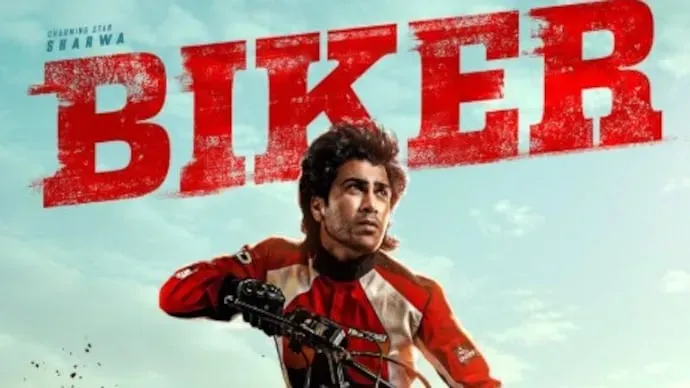
The film Biker delivers a visually driven narrative anchored in speed, rebellion, and stylized action, positioning itself within India’s evolving commercial cinema landscape. While the film leans heavily on spectacle and kinetic energy, its storytelling attempts to balance character arcs with adrenaline-fueled sequences. From a business perspective, “Biker” reflects the industry’s increasing investment in action-oriented content aimed at younger audiences. With production budgets often running into substantial crores (Rs.), the film’s success will ultimately depend on its ability to translate visual appeal into sustained box office performance and ancillary revenue streams.
Narrative and Thematic Framework
“Biker” explores themes of freedom, identity, and defiance, set against the backdrop of high-speed motorcycling culture. The narrative structure follows a familiar arc, combining personal संघर्ष with external conflict, though it occasionally prioritizes style over depth.
The film’s storytelling is designed to resonate with urban audiences, particularly younger viewers drawn to aspirational and high-energy narratives.
Visual Execution and Technical Craft
The film’s strongest asset lies in its visual execution. High-octane action sequences, dynamic camera work, and stylized cinematography contribute to an immersive viewing experience.
Significant investment in production design and stunt choreography—often amounting to considerable crores (Rs.)—is evident throughout. These elements enhance the film’s theatrical appeal, positioning it as a spectacle-driven release.
Performances and Character Dynamics
The cast delivers competent performances, with the lead actor anchoring the film’s emotional core. Supporting characters add texture to the narrative, though their development remains secondary to the central storyline.
The emphasis on visual storytelling occasionally limits deeper character exploration, a trade-off commonly observed in action-centric films.
Market Positioning and Audience Appeal
“Biker” is strategically positioned within the action genre, targeting a demographic that values spectacle and pace. The film’s marketing campaign has emphasized its visual scale and adrenaline-driven narrative, aligning with current audience preferences.
Such positioning is critical in a competitive market, where differentiation often hinges on delivering a distinctive cinematic experience.
Economic Implications and Revenue Outlook
From a financial standpoint, “Biker” represents a calculated investment in high-budget action cinema. Box office performance will be the primary determinant of its success, supported by additional revenue streams such as digital streaming rights and satellite distribution.
If the film sustains audience interest, it could generate significant returns, reinforcing the viability of action-driven projects within India’s entertainment economy.
Conclusion: A Test of Spectacle-Driven Cinema
“Biker” exemplifies the growing emphasis on scale and visual appeal in Indian filmmaking. While it may not redefine narrative conventions, its technical execution and market positioning offer valuable insights into current industry trends.
Ultimately, the film’s impact will depend on its ability to balance style with substance, delivering both immediate engagement and long-term commercial value in an increasingly competitive cinematic landscape.
Comments